
Walk into any Chinese kitchen, and you’re likely to find two ingredients tucked away in a cupboard or sitting on the counter: a bag of dried goji berries and a packet of red dates. They show up in soups, teas, congee, and even desserts. They’re so common that many people don’t think twice about them. But if you ask someone why they’re used so often, the answer almost always comes back to the same thing: they’re good for you.
In Traditional Chinese Medicine, goji berries and red dates are two of the most widely used food ingredients. They’re not just pantry staples — they’re considered medicinal. And their popularity isn’t a recent trend. These two ingredients have been part of Chinese wellness traditions for centuries. So what makes them so special?
What Are Goji Berries and Red Dates?
Let’s start with the basics. Goji berries (枸杞, gǒuqǐ) are the bright red fruits of the Lycium barbarum or Lycium chinense plant. They’re native to Asia and have been used in Chinese cooking and medicine for thousands of years. You’ll usually find them dried, looking like small, shriveled red raisins.
Red dates (红枣, hóngzǎo), also known as jujubes or Chinese dates, come from the Ziziphus jujuba tree. Despite the name, they’re not actually dates — they’re a type of stone fruit. When fresh, they’re green and taste a bit like an apple. When dried, they turn a deep reddish-brown and develop a sweet, chewy texture. In Chinese households, they’re used in everything from soups to teas to desserts.
Both ingredients are mild in flavor and easy to incorporate into daily cooking. That’s part of why they’ve become so popular — they don’t taste like medicine, even though they’re used for medicinal purposes.
The TCM Perspective on Goji Berries
In TCM theory, goji berries are classified as a sweet, neutral ingredient. They’re associated with the Liver and Kidney meridians — the energy pathways that TCM uses to describe how different parts of the body are connected.
Within the TCM framework, goji berries are believed to nourish the Liver and Kidneys. This is considered important because the Liver is thought to store blood and regulate the smooth flow of qi (vital energy), while the Kidneys are seen as the foundation of vitality and longevity. When these two organs are in balance, the theory goes, a person may experience better vision, stronger bones, and more energy.
One of the most common traditional uses of goji berries is for eye health. Classical texts describe them as beneficial for vision, particularly as people age. In TCM, the eyes are said to be connected to the Liver, so nourishing the Liver is thought to support clear eyesight.
Goji berries are also considered a “tonic” ingredient — something that gently strengthens the body over time rather than producing an immediate effect. This makes them suitable for long-term use, especially for people who feel run down or fatigued.
The TCM Perspective on Red Dates
Red dates, in TCM theory, are classified as sweet and warm. They’re associated with the Spleen and Stomach meridians. The Spleen in TCM is not the same as the anatomical spleen — it’s a broader concept related to digestion and the transformation of food into energy.
According to TCM, red dates are believed to strengthen the Spleen and Stomach, which are considered the foundation of good digestion. When the Spleen is functioning well, the body is thought to produce enough qi and blood to support all its systems. This is why red dates are often recommended for people who feel weak, pale, or low in energy.
Red dates are also considered a blood-nourishing ingredient. In TCM, blood is seen as a dense form of qi that circulates through the body, carrying nourishment to the organs and tissues. Red dates are thought to help replenish blood, especially after illness, childbirth, or heavy menstrual cycles.
Because of their sweet taste and warming nature, red dates are often paired with other ingredients to balance out stronger flavors. They’re a common addition to herbal formulas, not just for their medicinal properties but also to make the mixture more palatable.
Why They’re So Often Used Together
If you look at TCM recipes, you’ll notice that goji berries and red dates frequently appear together. This isn’t accidental. In TCM theory, ingredients are often combined to create a synergistic effect — where the whole is greater than the sum of its parts.
Goji berries are neutral and nourish the Liver and Kidneys. Red dates are warm and strengthen the Spleen and Stomach. Together, they’re thought to support both the upper and lower parts of the body’s energy system. The combination is considered gentle enough for daily use but effective enough to make a difference over time.
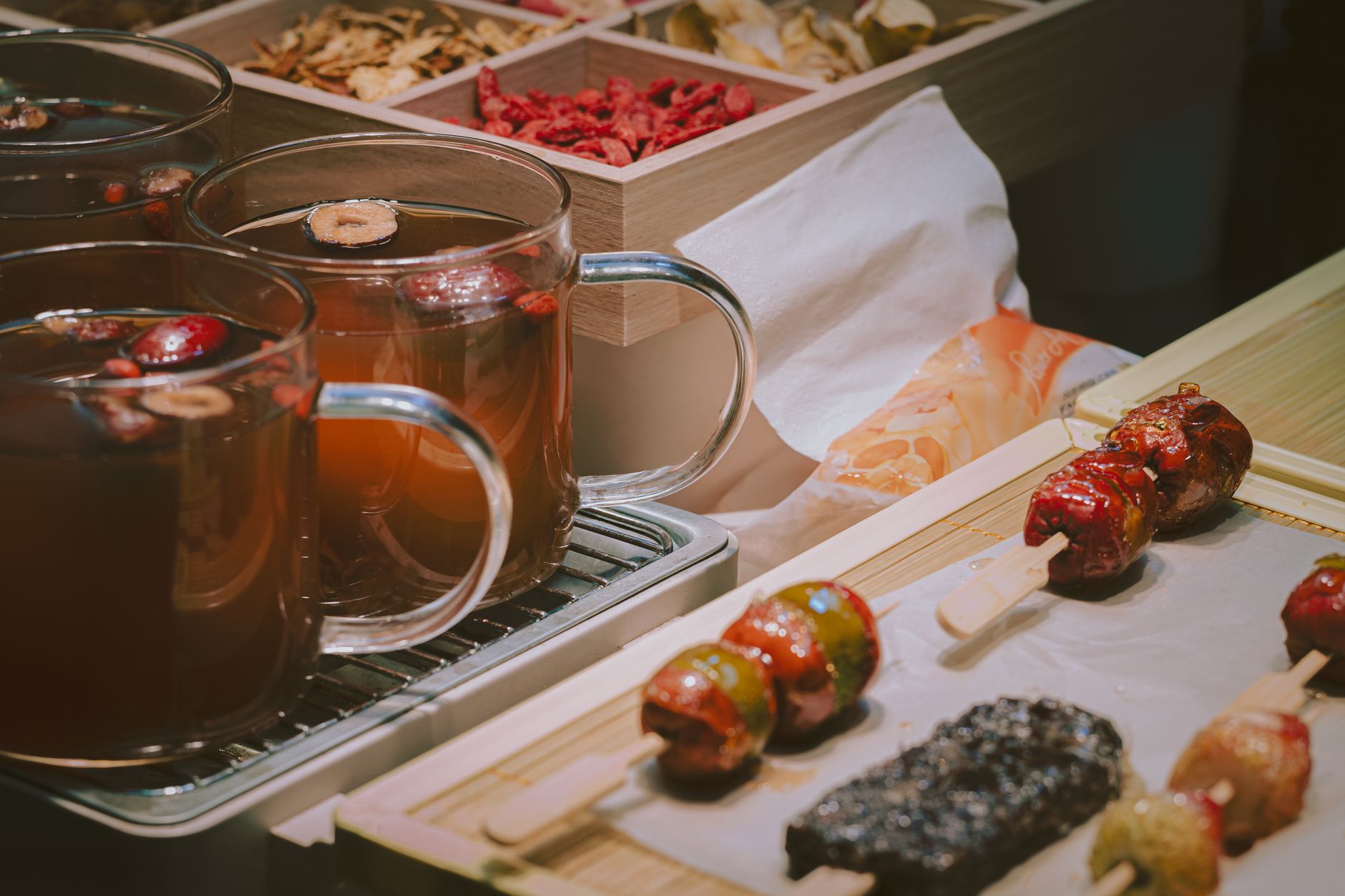
One classic example is a simple tea made by steeping goji berries and red dates in hot water. Many Chinese households drink this regularly, especially during colder months or when they feel a bit run down. The tea is sweet, warming, and easy to make — a perfect example of how TCM principles can be woven into everyday life.
Another common preparation is adding both ingredients to chicken soup. The soup is believed to be nourishing and restorative, often given to people recovering from illness or to new mothers after childbirth. The goji berries add a subtle sweetness, while the red dates deepen the flavor and contribute their warming properties.
Historical Origins
The use of goji berries and red dates in Chinese medicine goes back a long way. The Shen Nong Ben Cao Jing (《神农本草经》), one of the oldest Chinese pharmacopoeias, mentions goji berries as a superior herb — a category reserved for substances considered safe for long-term use and beneficial for overall health. The text dates back to around 200 CE, though it’s believed to compile knowledge from even earlier periods.
Red dates appear in classical texts as well. The Huangdi Neijing (《黄帝内经》), the foundational text of TCM, mentions jujubes as a food that can harmonize the body. Over the centuries, both ingredients became staples in Chinese medicine and cuisine, appearing in countless formulas and recipes.
What’s interesting is that these ingredients were never seen as separate from food. In TCM, the line between food and medicine has always been blurry. Goji berries and red dates are perfect examples of this — they’re considered medicinal, but they’re also just ordinary ingredients that people cook with every day.
Modern Popularity
In recent years, goji berries have gained popularity outside of China, often marketed as a “superfood.” You can find them in smoothie bowls, energy bars, and health food stores around the world. Red dates are less well-known internationally, but they’re becoming more common as interest in Asian ingredients grows.
From a scientific perspective, research on both ingredients has produced some interesting findings. Studies have explored the antioxidant properties of goji berries, which contain compounds like zeaxanthin and polysaccharides. Some research has looked at their potential effects on eye health, immune function, and skin aging. The results are mixed but not insignificant — a number of small studies have suggested possible benefits.
Red dates have also been studied. They’re rich in vitamin C, fiber, and various antioxidants. Some research has explored their potential effects on digestion, sleep quality, and immune function. As with goji berries, the evidence is preliminary but intriguing.
It’s worth noting that the scientific framework and the TCM framework measure different things. A study on goji berries might look at a specific compound and its effect on a particular biological pathway. TCM, on the other hand, looks at the ingredient as a whole and its effect on the body’s energy system. The two approaches don’t always align neatly, but they don’t have to — they’re simply different ways of understanding the same ingredient.
How They’re Used in Daily Life
For many Chinese families, goji berries and red dates are just part of the kitchen routine. They’re added to congee (rice porridge) for breakfast, steeped in tea during the afternoon, or thrown into soups for dinner. There’s no special ceremony around them — they’re just ingredients that happen to be good for you.
One common habit is adding a handful of goji berries and a few red dates to a thermos of hot water. By the end of the day, the water has taken on a sweet, slightly fruity flavor. Some people drink this instead of plain water, especially during colder months or when they feel a cold coming on.
Another popular preparation is red date tea, made by simmering dried red dates in water until the liquid becomes dark and sweet. Goji berries are often added toward the end. This tea is sometimes given to children as a gentle tonic or to adults who feel tired after a long day.
In Chinese postpartum care, a soup made with goji berries, red dates, and chicken is considered a classic restorative dish. It’s believed to help replenish blood and energy after childbirth. This tradition has been passed down through generations and is still practiced in many families today.
What Makes Them So Popular
So why are goji berries and red dates so widely used? The answer comes down to a few key factors.
First, they’re gentle. Unlike some stronger herbs, goji berries and red dates are considered safe for daily use. They don’t have strong flavors or dramatic effects. They work slowly and subtly, supporting the body over time rather than producing an immediate change.
Second, they’re versatile. You can add them to almost anything — tea, soup, congee, porridge, desserts, even savory dishes. They’re not fussy ingredients that require special preparation. Just rinse them and throw them in.
Third, they’re accessible. Goji berries and red dates are inexpensive and widely available in Chinese grocery stores. You don’t need to visit a specialty herb shop to find them. This accessibility has helped them become staples in everyday cooking.
And finally, they’re backed by a long tradition. The idea that these ingredients are good for you isn’t a marketing claim — it’s something that has been passed down through generations. When your grandmother tells you to eat goji berries for your eyes, and her grandmother told her the same thing, the belief carries weight.
Frequently Asked Questions
Can you eat goji berries and red dates every day?
In TCM, both ingredients are considered safe for daily use in moderate amounts. Many Chinese households include them in their regular diet without any issues. As with any food, moderation is key.
Are goji berries and red dates the same thing?
No, they’re completely different plants. Goji berries come from the Lycium barbarum plant, while red dates come from the Ziziphus jujuba tree. They have different flavors, textures, and TCM properties, though they’re often used together.
Do goji berries and red dates have scientific evidence behind them?
Some research has explored the potential health benefits of both ingredients, particularly their antioxidant properties. However, the scientific evidence is still limited and mixed. The TCM framework and the scientific framework approach these ingredients differently.
Related TCM Concepts
- What Is Qi and How Does It Work?
- Food Energetics: Cooling vs Warming Foods
- The Spleen and Stomach in TCM
- Blood Deficiency in TCM: What Does It Mean?
- Tonic Herbs: Gentle Support for Daily Health