
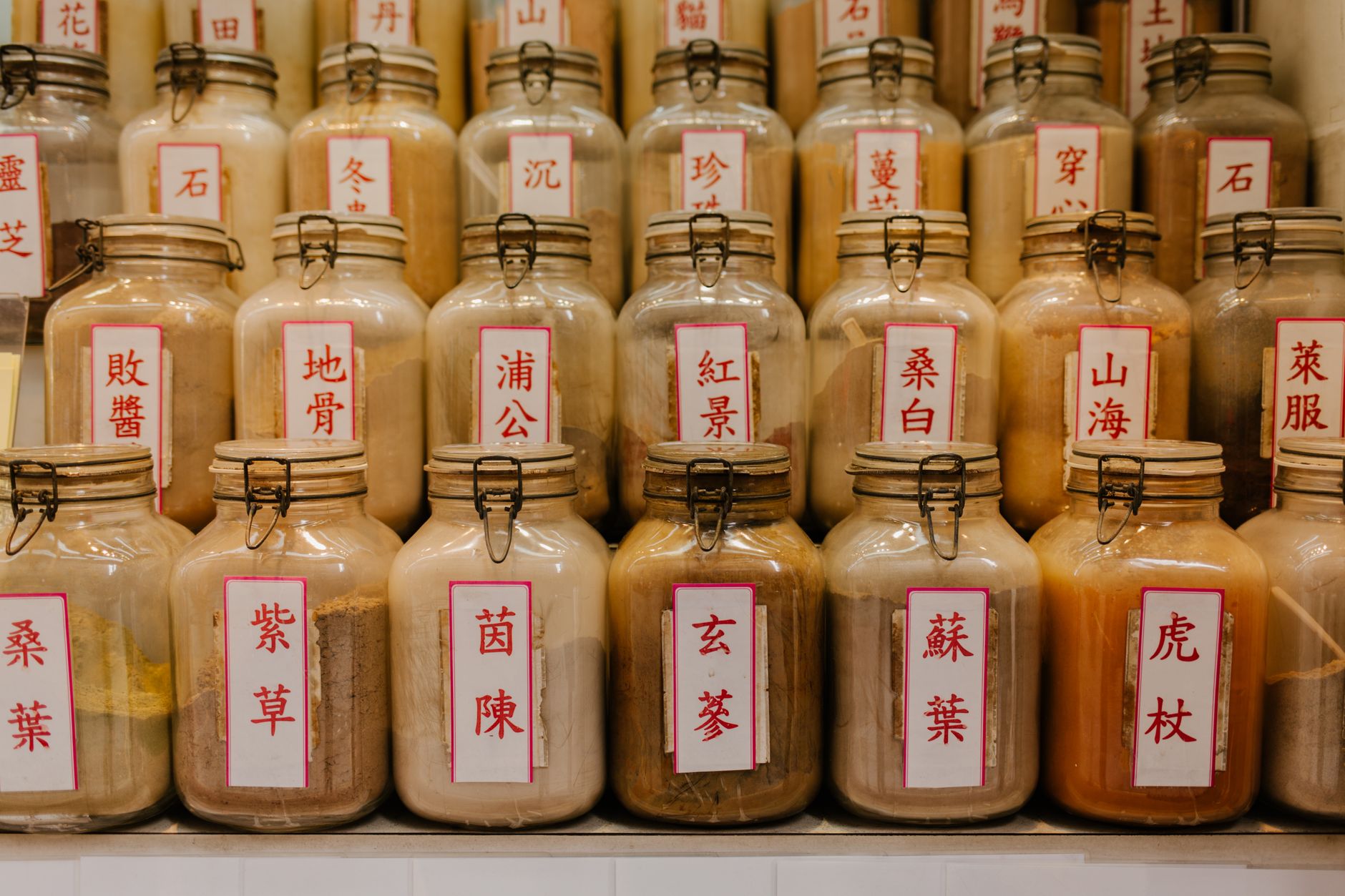
If you walk into a TCM pharmacy in Singapore or Shanghai, the first thing that hits you is the smell. Dried herbs in wooden drawers. Glass jars holding things you can’t immediately identify. A practitioner taking a pulse with three fingers, eyes half-closed, reading something invisible. It feels ancient. And in a way, it is. But the story of how Traditional Chinese Medicine became what it is today is not a straight line from antiquity to the present. It’s a story of emperors, revolutions, near-death experiences, and a surprising revival.
Where Does TCM Actually Begin?
The origin of TCM is usually traced back to a single text: the Huangdi Neijing, or the Yellow Emperor’s Inner Classic. This book, compiled sometime between the 3rd century BCE and the 2nd century CE, is the foundation of everything that follows. It’s written as a dialogue between the mythical Yellow Emperor and his physician, Qi Bo. They discuss qi, yin and yang, the five elements, and how the body relates to the seasons.
What’s remarkable is how much of this text is still referenced today. A TCM practitioner in 2024 might cite the Neijing to explain why some people find it helpful to avoid cold food in winter. The framework laid out in those pages has proven remarkably durable.
But the Neijing wasn’t the only early text. Around the same time, the Shennong Bencao Jing (the Divine Farmer’s Materia Medica) catalogued hundreds of herbs and their properties. This was the beginning of Chinese herbal medicine — a tradition that would eventually grow to include thousands of substances, from ginseng to deer antler to dried citrus peel.
The Golden Age of TCM
The Tang Dynasty (618–907 CE) is often described as a golden age for Chinese medicine. The imperial court established one of the world’s first medical colleges. Physicians were trained, examined, and licensed. Texts were standardized. The great physician Sun Simiao wrote Essential Prescriptions Worth a Thousand Gold, a massive compendium of medical knowledge that included treatments for everything from malaria to mental illness.
During this period, TCM wasn’t a fringe practice. It was the mainstream medical system of the most advanced civilization on earth. If you got sick in Tang Dynasty China, you went to a doctor trained in the classics, who would diagnose you using the same framework of qi, yin-yang, and the five elements that is still taught today.
What’s less known is that TCM was never static. It absorbed influences from Indian Ayurvedic medicine, Persian medical texts, and later, from European medicine brought by Jesuit missionaries. The idea that TCM is a pure, unchanging tradition is a myth. It has always been a living system that adapted to new information.
The Crisis of the 20th Century
The biggest threat to TCM came not from any disease, but from modernity itself. In the late 19th and early 20th centuries, as Western medicine arrived in China with missionaries and colonial powers, TCM began to look outdated by comparison. Microscopes revealed bacteria. Surgery could remove tumors. Vaccines prevented epidemics. How could a system based on invisible qi and organ networks that didn’t match anatomical reality compete?
In the 1920s and 1930s, there were serious movements to abolish TCM entirely. Intellectuals argued that China needed to embrace science and leave its “superstitious” traditions behind. In 1929, the Nationalist government actually passed a law to ban TCM. It was only after massive public protests — and the fact that most of the population still relied on TCM for healthcare — that the law was never fully enforced.
Then came the Cultural Revolution (1966–1976). During this chaotic period, many traditional practices were suppressed. Temples were destroyed. Classical texts were burned. TCM practitioners were persecuted. It looked like the tradition might not survive.
The Barefoot Doctors and the Revival
Paradoxically, it was Mao Zedong who saved TCM — though not out of reverence for tradition. Mao saw TCM as a practical solution to a massive problem: China had hundreds of millions of people and very few Western-trained doctors. TCM practitioners were everywhere. They were cheap. They used local herbs. So Mao made a pragmatic decision: integrate TCM into the new healthcare system.
This led to the “barefoot doctor” program in the 1960s and 1970s. Farmers and villagers were given basic training in both Western medicine and TCM. They learned to diagnose common illnesses, prescribe herbs, and perform acupuncture. These barefoot doctors became the backbone of rural healthcare in China for decades.
The program had an unexpected side effect: it preserved TCM knowledge. While the Cultural Revolution was destroying temples and texts, the barefoot doctor program kept the practical side of TCM alive. Grandmothers taught their daughters which herbs to pick. Village healers passed down their formulas. The tradition survived not in universities, but in kitchens and fields.
TCM Goes Global
The real turning point for TCM’s global profile came in 1971. That year, New York Times journalist James Reston traveled to China and underwent emergency appendectomy surgery. His doctors used acupuncture for post-operative pain relief. Reston wrote about his experience, and the article caused a sensation in the West. Suddenly, acupuncture was news.
In the decades that followed, TCM spread around the world. Acupuncture became the most visible export, with practitioners setting up clinics in New York, London, and Sydney. Chinese herbs found their way into health food stores. Practices like cupping and gua sha became trendy among athletes and celebrities.
Today, TCM is recognized by the World Health Organization as a formal medical system. It is taught in universities in China, Europe, and North America. In China itself, TCM hospitals coexist with Western medicine hospitals. Many Chinese people use both systems — seeing a Western doctor for an acute infection and a TCM practitioner for chronic digestive issues or stress.
What Makes TCM Different?
To understand why TCM has survived for over two millennia, it helps to understand what makes it fundamentally different from modern Western medicine.
Western medicine tends to think in terms of parts: the liver, the heart, the immune system. It looks for specific causes — a virus, a gene mutation, a blocked artery. Treatment is often about removing or blocking the problem.
TCM thinks in terms of patterns. The body is a whole system, connected to the environment. Health is a state of balance. Disease is a disruption of that balance. The goal of treatment is not to kill a pathogen, but to restore harmony.
This is why TCM diagnoses sound so different. Instead of “you have a bacterial infection,” a TCM practitioner might say “you have Damp-Heat in the Spleen.” Instead of “you have chronic fatigue,” they might say “your Kidney Qi is deficient.” These are not anatomical descriptions. They are functional patterns — ways of describing how the body’s energy is moving (or not moving).
For someone raised in a Western medical framework, this can sound like mysticism. But within the TCM framework, it’s a coherent and practical system. A practitioner who diagnoses Damp-Heat knows exactly which herbs to prescribe and which acupuncture points to needle. The system works — not because it matches modern anatomy, but because it has been refined through centuries of observation and clinical practice.
The Science Question
Does TCM hold up to scientific scrutiny? The answer is complicated.
Some TCM practices have been studied extensively. Acupuncture, for example, has been the subject of thousands of clinical trials. The evidence is mixed. Some studies show it works for certain types of pain. Others suggest the effect is mostly placebo. The NIH notes that acupuncture may be effective for conditions like chronic pain and nausea, but the mechanisms are not well understood.
Chinese herbal medicine is even harder to study. A single formula might contain a dozen herbs, each with dozens of active compounds. Isolating which compound does what — and whether it interacts with other herbs — is a monumental task. Some individual herbs have been studied and found to have real pharmacological effects. Artemisinin, a malaria drug derived from the herb Artemisia annua, earned Chinese scientist Tu Youyou a Nobel Prize in 2015.
But the TCM framework itself — the idea of qi, meridians, and organ networks — has not been validated by modern science. No study has ever found physical evidence of qi flowing through meridians. The TCM model of the body does not match the anatomical model.
This doesn’t mean TCM is “wrong.” It means it operates in a different framework. As one researcher put it: “TCM is a system of pattern recognition, not a system of biological mechanisms.” It works as a clinical tool for many people, even if we can’t explain exactly why in scientific terms.
TCM Today
In modern China, TCM is neither a relic nor a fringe practice. It is a regulated, government-supported medical system. There are TCM hospitals, TCM universities, and TCM research institutes. The Chinese government has invested heavily in modernizing TCM — standardizing herbal formulas, running clinical trials, and integrating it with Western medicine.
At the same time, TCM faces challenges. Younger generations in China are less likely to use it. The rise of evidence-based medicine has put pressure on TCM to prove its efficacy. And there are ongoing concerns about safety — some Chinese herbs can be toxic if used incorrectly, and quality control is inconsistent.
But TCM also has a resilience that has surprised everyone. It survived a ban attempt in the 1920s. It survived the Cultural Revolution. It survived the arrival of antibiotics and MRI machines. And now, in the age of wellness culture and holistic health, it is finding a new audience — not just in China, but around the world.
What I find most interesting about this story is how ordinary it feels to the people who grow up with it. In Singapore, my grandmother never thought of TCM as “alternative medicine.” It was just medicine. You went to the Western doctor for a fever. You went to the TCM shop for a cough that wouldn’t go away. Both were normal. Both were part of the same toolkit.
That pragmatic coexistence — the willingness to use whatever works, regardless of which framework it comes from — might be the most enduring lesson of TCM’s long history.
Frequently Asked Questions
Is TCM considered a real medical system?
Yes. The World Health Organization recognizes TCM as a formal medical system. In China, it is taught in universities, practiced in hospitals, and regulated by the government. It is also practiced legally in many other countries, though regulations vary.
Does TCM work for serious diseases like cancer?
In China, TCM is sometimes used alongside Western medicine for cancer care, particularly for managing side effects of chemotherapy. However, TCM is not considered a replacement for standard cancer treatments. The evidence for its effectiveness in treating cancer directly is limited.
Why do some people say TCM is dangerous?
Some Chinese herbs can be toxic if used incorrectly. Quality control is also a concern — some products have been found to contain heavy metals or undeclared pharmaceutical drugs. For these reasons, it is important to use TCM products from reputable sources and under the guidance of a qualified practitioner.
Related TCM Concepts
- What Is Qi and How Does It Work?
- Yin and Yang: The Foundation of TCM
- The Five Elements in Chinese Medicine
- How Acupuncture Works (According to TCM)
- Chinese Herbal Medicine: A Beginner’s Guide