
If you’ve ever walked past a Chinese herbal shop and wondered what’s inside those little drawers, or seen someone with circular bruising on their back and felt curious rather than concerned, you’re not alone. Traditional Chinese Medicine can feel like a completely different language—and in many ways, it is. But once you understand a few of its core ideas, the whole system starts to make a surprising amount of sense.
What Is Traditional Chinese Medicine?
Traditional Chinese Medicine, often shortened to TCM, is a medical system that has developed over more than 2,000 years in China. It’s not a single practice but a collection of theories and treatments that include acupuncture, herbal medicine, dietary therapy, massage (tui na), and movement practices like tai chi and qigong.
What makes TCM different from modern Western medicine is its starting point. Western medicine tends to look at the body in parts—organs, cells, chemicals. TCM looks at the body as a whole system, connected to itself and to the environment. In TCM, health is about balance. Illness is what happens when that balance is disturbed.
This might sound abstract, but the framework is surprisingly practical. It gives people a way to think about their bodies, their food, and their daily habits that feels intuitive once you learn the basics.
The Big Idea: Qi (气)
If there’s one concept you might want to understand in TCM, it’s qi (pronounced “chee”). Qi is often translated as “vital energy” or “life force.” In TCM theory, qi flows through the body along pathways called meridians. It’s what animates you—it’s the energy behind your digestion, your breathing, your movement, your thinking.
When qi flows smoothly, some people feel healthy. When it gets blocked, sluggish, or depleted, they might feel unwell. A TCM practitioner might say your qi is “stagnant” or “deficient,” and the treatment they recommend—whether it’s acupuncture, herbs, or a change in diet—is aimed at restoring that smooth flow.
It’s important to note that qi is not something you can measure with a blood test or see under a microscope. Within the TCM framework, it’s a useful model for describing patterns of health and illness. Many people find it a helpful way to think about their energy levels and overall well-being.
Yin and Yang: The Balance of Opposites
You’ve probably seen the yin-yang symbol—the black and white circle with a dot of each color inside the other. In TCM, yin and yang describe two complementary forces that exist in everything.
Yin is cool, dark, still, and nourishing. Yang is warm, bright, active, and transformative. Health, in TCM, is about keeping these two forces in balance. Too much yin might make you feel cold and sluggish. Too much yang might make you feel restless and overheated.
This isn’t about good versus evil. It’s about harmony. A healthy person has enough yin to rest and recover, and enough yang to get things done. The seasons, the time of day, and even the foods you eat all have yin or yang qualities. TCM encourages you to adjust your habits to maintain balance as your environment changes.
The Five Elements (五行)
Another foundational idea in TCM is the Five Elements: Wood, Fire, Earth, Metal, and Water. These aren’t physical elements in the chemical sense. They’re categories that describe different qualities and processes in the body and the natural world.
Each element is associated with specific organs, emotions, seasons, colors, and tastes. For example:
- Wood is linked to the Liver and Gallbladder, the emotion of anger, and the season of spring.
- Fire is linked to the Heart and Small Intestine, the emotion of joy, and summer.
- Earth is linked to the Spleen and Stomach, the emotion of worry, and late summer.
- Metal is linked to the Lungs and Large Intestine, the emotion of grief, and autumn.
- Water is linked to the Kidneys and Bladder, the emotion of fear, and winter.
These relationships help TCM practitioners understand how different parts of the body influence each other. If your Liver is out of balance, for instance, it might affect your Spleen—because Wood controls Earth in the element cycle. It’s a way of thinking that connects everything, and it gives practitioners a map for diagnosing and treating patterns of disharmony.
How TCM Sees the Body’s Organs
In TCM, the organs are understood differently than in Western anatomy. The TCM “Spleen,” for example, isn’t just the physical organ that filters blood. It’s a broader concept that includes the function of digestion, energy production, and holding things in place.
Similarly, the TCM “Liver” is associated with the smooth flow of qi and emotions. If your Liver qi is stagnant, you might feel irritable, frustrated, or have digestive issues—even if your liver enzymes are perfectly normal on a blood test.
This can be confusing at first, but it helps to think of TCM organs as functional systems rather than physical structures. They describe what the body does, not just what it’s made of.
Common TCM Treatments
Once you understand the basic framework, the treatments start to make more sense. Here are a few you’ve probably heard of:
Acupuncture
Thin needles are inserted into specific points on the body to stimulate the flow of qi. In TCM theory, this helps clear blockages and restore balance. Many people turn to acupuncture for pain, stress, or digestive issues.
Herbal Medicine
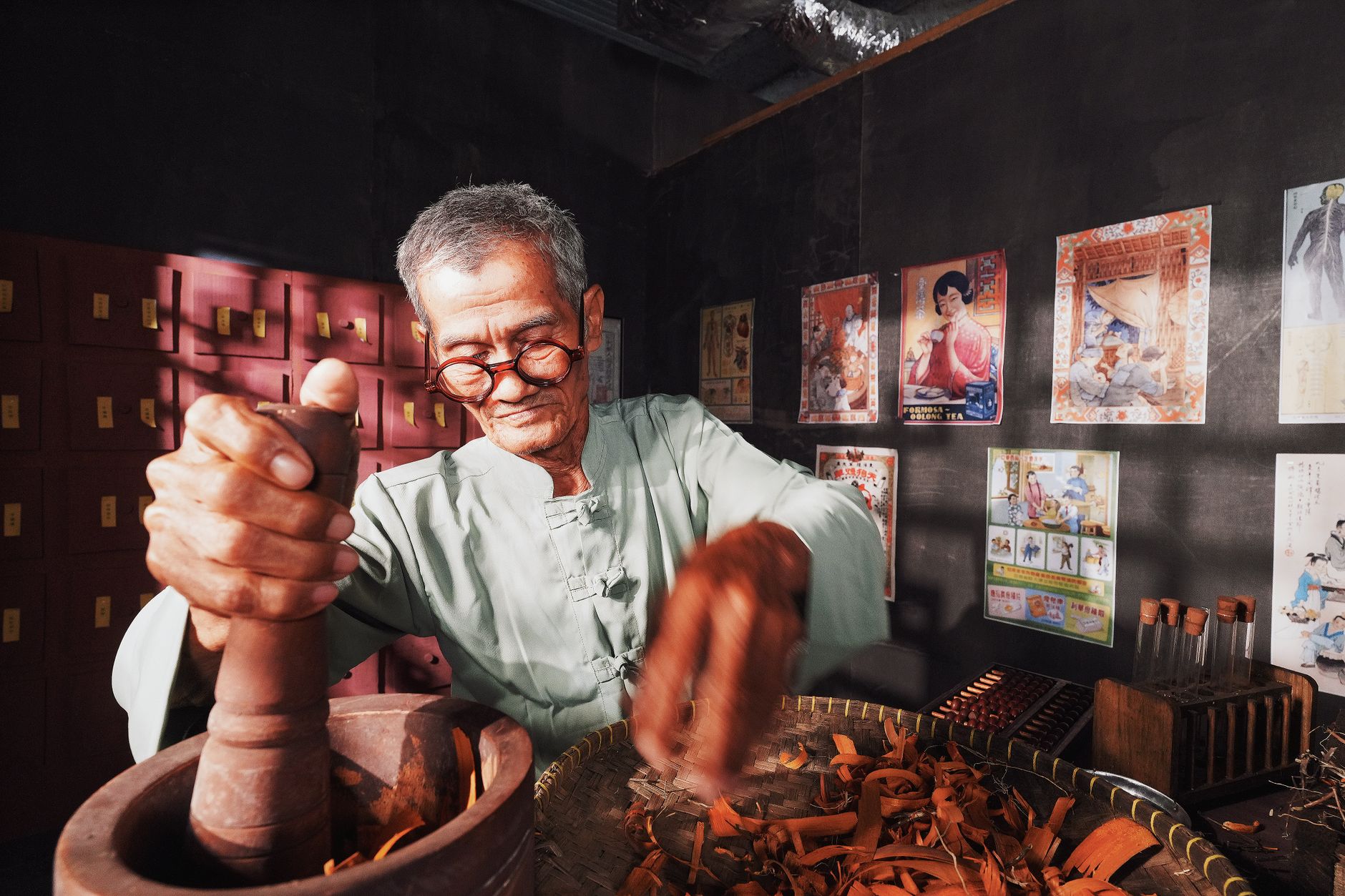
TCM uses combinations of plants, minerals, and sometimes animal products to create formulas tailored to an individual’s pattern of imbalance. These are often taken as teas, powders, or pills. A formula might include ingredients like ginseng, licorice root, or ginger.
Cupping
Glass or silicone cups are placed on the skin, creating suction. This is believed to move stagnant blood and qi, and it’s often used for muscle pain or respiratory conditions. The circular marks that result are not bruises—they’re a sign that the suction has drawn blood to the surface.
Gua Sha
A tool is used to scrape the skin in long strokes, usually on the back or neck. Like cupping, it’s meant to release stagnation and promote circulation. It can leave temporary red marks that fade within a few days.
Dietary Therapy
Food is considered medicine in TCM. Different foods have different energetic properties—some are warming, some are cooling, some are drying, some are moistening. A TCM practitioner might recommend certain foods based on your constitution and the season.
What Modern Research Says
Scientific research on TCM is mixed. Some practices, like acupuncture, have been studied extensively. The National Institutes of Health (NIH) notes that acupuncture may help with conditions like chronic pain and nausea, though the mechanisms aren’t fully understood from a Western perspective.
Herbal medicine is more complicated. Some herbs have been studied and found to have active compounds that align with their traditional uses. Others have raised safety concerns, particularly when herbs are contaminated or used incorrectly.
What’s clear is that TCM and modern medicine operate on different assumptions. TCM is a system built on observation and pattern recognition over centuries. Modern medicine is built on controlled experiments and measurable data. They don’t always agree, but many people find value in both.
Is TCM Right for You?
That’s a personal question. Some people use TCM as their primary healthcare system. Others use it alongside Western medicine—what’s sometimes called integrative medicine. And some people are simply curious about the cultural and historical framework.
If you’re considering a TCM treatment, you might consider finding a licensed practitioner. In many countries, including the United States and the United Kingdom, there are regulatory bodies that set standards for training and practice. A good practitioner will ask about your symptoms, your lifestyle, and your medical history before recommending anything.
It’s also worth telling your Western doctor if you’re using TCM treatments, especially herbs. Some herbs can interact with prescription medications, and it’s better to be transparent.
Why TCM Still Matters
What I find most interesting about TCM is how it gives people a language to talk about their bodies that feels personal and connected. It’s not just about treating symptoms—it’s about understanding patterns. Why do you feel tired at certain times of the day? Why does your digestion act up in the winter? Why do you crave certain foods when you’re stressed?
TCM offers a framework for answering those questions. Whether you find the explanations convincing or not, the system itself is a remarkable example of how human beings have tried to make sense of health and illness for thousands of years.
So next time you see a jar of goji berries in a health food store, or you walk past a clinic offering cupping, you’ll have a better idea of what’s behind it. It’s not magic. It’s a different way of thinking—one that has survived for centuries because, for many people, it simply makes sense.
Frequently Asked Questions
Is TCM safe?
When practiced by a qualified professional, TCM is generally considered safe. Acupuncture uses sterile, single-use needles. Herbal formulas should be prescribed by someone trained in TCM to avoid interactions or incorrect dosing. As with any treatment, it’s wise to do your research and choose a reputable practitioner.
Can TCM treat serious illnesses?
In China, TCM is sometimes used alongside Western medicine for conditions like cancer or heart disease, often to manage symptoms or side effects. However, TCM is not a substitute for emergency medical care or evidence-based treatments for serious conditions. It’s best seen as a complementary approach.
Do I have to believe in qi for TCM to work?
Not at all. Many people try acupuncture or herbal medicine without any particular belief in qi and still find benefits. The framework is a way of describing patterns, not a test of faith. You can use TCM as a practical tool without adopting its entire worldview.
How do I find a good TCM practitioner?
Look for someone who is licensed or certified by a recognized professional body in your country. In the U.S., the National Certification Commission for Acupuncture and Oriental Medicine (NCCAOM) is a common credential. Ask about their training, experience, and whether they coordinate care with Western doctors if needed.