
If you’ve seen photos or videos of gua sha, the first thing you probably noticed were the marks. They look like bruises — dark red or purple streaks across the skin, often on the back, shoulders, or neck. It’s a striking image, and it raises an obvious question: what are those marks, and do they mean something is wrong?
The short answer, within the framework of Traditional Chinese Medicine (TCM), is that the marks are not bruises in the way we usually think of them. They are not a sign of injury. Instead, they are understood as a visible sign of something called “sha” — a term that refers to stagnant blood or energy that has accumulated beneath the skin. The practice of gua sha is meant to bring this stagnation to the surface, where it can be cleared.
But that explanation raises more questions than it answers. What exactly is “stagnation”? Why would you want to bring it to the surface? And how do practitioners distinguish between a meaningful mark and an actual bruise?
Let’s walk through what gua sha marks mean from the TCM perspective, how practitioners interpret them, and what the experience actually looks like.
What Is Gua Sha?
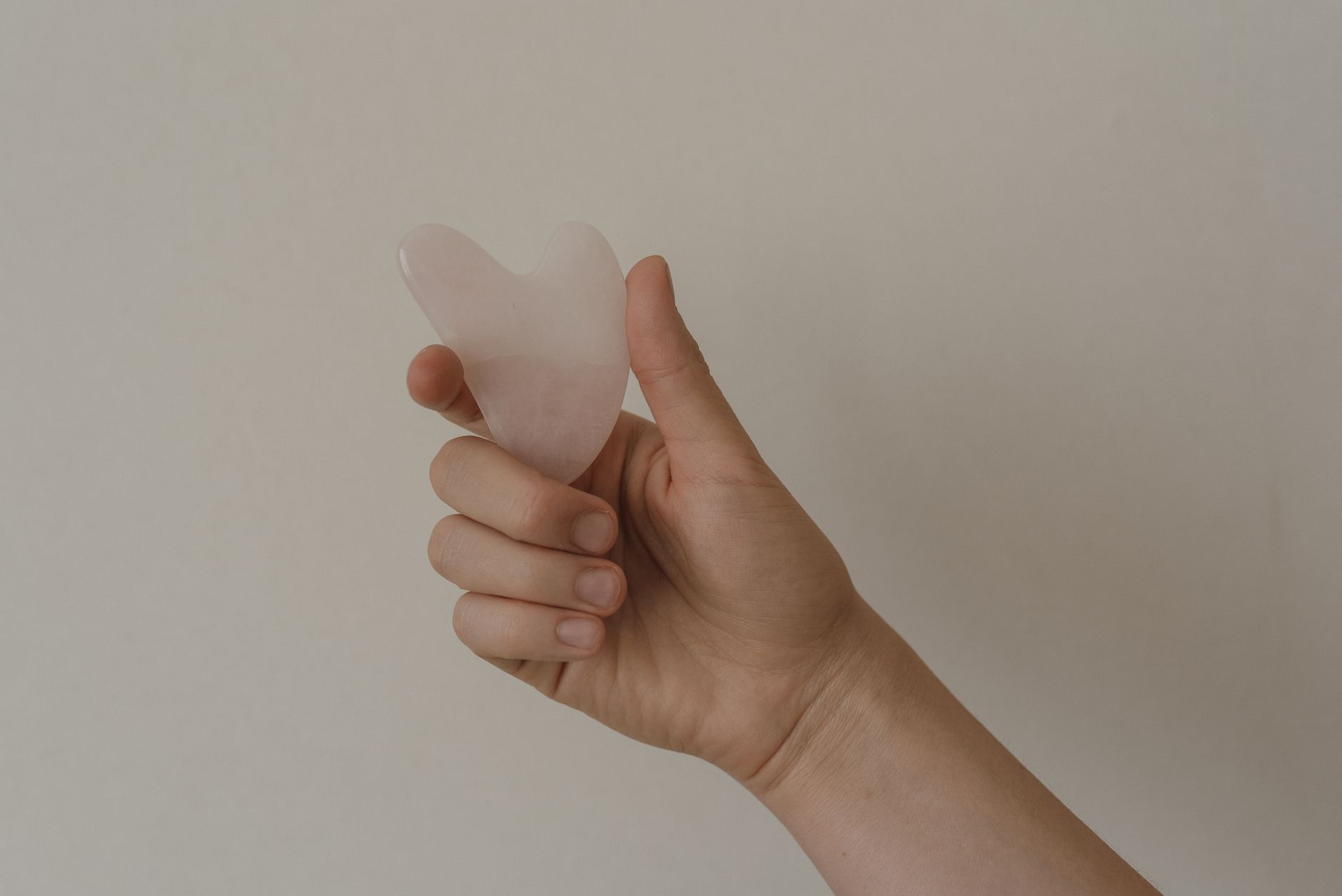
Gua sha is a technique in which a practitioner uses a smooth-edged tool — often made of jade, horn, or stainless steel — to repeatedly scrape the skin in long, firm strokes. The word “gua” means to scrape or rub, and “sha” refers to the reddish marks that appear as a result.
The practice has been documented in Chinese medical texts for centuries. The earliest known reference appears in the Shang Han Lun (Treatise on Cold Damage Disorders), a classical text from around 200 CE. In that context, gua sha was used as a method for treating what were described as “summer heat” disorders and certain types of fever.
Today, gua sha is used for a wide range of concerns. People seek it out for muscle tension, chronic pain, headaches, and even respiratory issues like coughs or congestion. Within the TCM framework, the reasoning involves the movement of qi (vital energy) and blood through the body’s network of channels, or meridians.
What Are the Marks, Exactly?
In TCM theory, the marks are called “sha.” The term is sometimes translated as “sand” or “grains,” which gives you a sense of how they are described — as tiny, grain-like accumulations of stagnant material that rise to the surface when the skin is scraped.
Practitioners explain that when the gua sha tool is applied with the right pressure and technique, it causes tiny capillaries near the surface of the skin to rupture. This is what creates the red or purple marks. But in the TCM framework, this is not seen as damage. It is seen as a release.
The idea is that areas of the body where qi and blood have become stuck — due to injury, tension, or illness — will produce more pronounced sha. The marks are a visual map of where stagnation exists. A healthy area, by contrast, might show little to no marking even after the same amount of scraping.
This is a key distinction. In TCM, the marks are not the goal in themselves. They are a diagnostic clue and a sign that the treatment is working. The practitioner is not trying to “bruise” the skin. They are trying to draw out sha, and the marks are evidence that it has been brought to the surface.
How Do Practitioners Interpret the Marks?
Not all marks are the same. In TCM, the color, pattern, and location of the sha are all considered meaningful.
Light red marks might indicate a relatively mild stagnation. Dark red or purple marks suggest a more significant blockage. Some practitioners also look at how quickly the marks fade — faster fading is generally seen as a positive sign, while marks that linger for a week or more might indicate a deeper or more chronic issue.
The location of the marks also matters. Gua sha is often performed along the back, which in TCM is considered a key area for the Bladder meridian — a channel that runs along the spine and is associated with the body’s ability to regulate fluids and defend against external pathogens. Marks that appear along specific points on the back might be interpreted in relation to the organs or systems connected to those points.
It’s worth noting that this interpretive framework is specific to TCM. A doctor trained in Western medicine would look at the same marks and see something different — namely, petechiae or minor capillary rupture caused by mechanical friction. The two systems are describing the same physical phenomenon, but they interpret it through completely different lenses.
Are the Marks Painful?
This is one of the most common questions people have. The answer depends on the person and the area being treated.
During a gua sha session, the scraping itself can feel intense — some people describe it as a deep, burning sensation. But it is not typically described as sharp or injurious pain. Many people report that the sensation is uncomfortable but tolerable, and that it is followed by a feeling of relief or release.
After the session, the marked areas may feel tender to the touch, similar to how you might feel after a deep tissue massage. The marks themselves are not usually painful unless pressed directly. Most people find that any tenderness fades within a day or two, even if the visible marks take longer to disappear.
In TCM, this temporary tenderness is not seen as a problem. It is understood as part of the body’s process of clearing the stagnation that was brought to the surface.
How Long Do the Marks Last?
The duration varies widely. Some marks fade within a day or two. Others can last for a week or more. The color and intensity of the marks often correlate with how long they take to disappear — darker marks tend to linger longer.
Practitioners generally advise waiting until the marks have fully faded before performing gua sha on the same area again. This is partly practical — the skin needs time to recover — and partly based on the TCM idea that the body has completed a cycle of clearing and needs time to stabilize.
For someone new to gua sha, seeing marks that last several days can be surprising. But within the TCM framework, this is considered normal and even desirable. The marks are not a sign that something went wrong. They are a sign that something was addressed.
What Does Modern Research Say?
Scientific studies on gua sha are relatively limited, but a few have looked at the marks specifically. Researchers have confirmed that the marks are caused by capillary rupture — essentially, tiny bruises. But they have also noted that the marks do not appear to cause tissue damage in the way that a typical bruise from blunt force trauma might.
Some studies have explored whether gua sha has measurable effects on circulation, inflammation, or pain perception. The results are mixed. A 2014 review published in the journal Pain Medicine found that gua sha appeared to reduce pain and improve function in people with chronic neck pain, but the authors noted that the quality of the evidence was limited. A 2017 study in PLOS ONE found that gua sha increased microcirculation in the treated areas, which could help explain the sensation of relief that many people report.
What the research does not do is confirm or refute the TCM concept of “sha” as stagnant blood or energy. The two frameworks are asking different questions. Modern research asks: does this technique produce measurable physiological changes? TCM asks: does this technique restore balance to the body’s internal systems? Both are valid questions, but they don’t always overlap neatly.
Can Anyone Get Gua Sha?
Gua sha is generally considered safe when performed by a trained practitioner. However, some people with certain conditions — such as blood clotting disorders, varicose veins, or skin infections — might be advised to avoid it. Pregnant women are also often advised to avoid gua sha on the abdomen and lower back.
It is also worth noting that gua sha should not be performed on areas with open wounds, sunburn, or recent scars. A good practitioner will ask about your medical history and examine the skin before beginning.
For most healthy people, the marks are temporary and harmless. But if you are considering gua sha, it is always a good idea to speak with a qualified practitioner who can explain what to expect and answer any questions you have.
Frequently Asked Questions
Are gua sha marks the same as bruises?
In a literal sense, yes — they are caused by broken capillaries under the skin. But in the TCM framework, they are understood differently. A bruise from an injury is seen as accidental damage. Gua sha marks are intentionally created as part of a therapeutic process, and they are interpreted as a sign that stagnation has been released.
Do gua sha marks mean the treatment worked?
Within TCM, the presence of marks is often seen as a sign that the treatment was effective — that sha was present and has been brought to the surface. However, the absence of marks does not necessarily mean the treatment failed. Some areas may have little to no stagnation, and a skilled practitioner adjusts their technique accordingly.
Can you do gua sha on yourself at home?
Yes, many people practice gua sha at home, especially on the face and neck. Facial gua sha typically produces very light marks or none at all, since the pressure is much gentler. For body gua sha, it is generally recommended to learn from a practitioner first to understand the correct technique and pressure.
How can you tell the difference between gua sha marks and real bruises?
Gua sha marks tend to appear in streaks or lines that follow the direction of the scraping. Bruises from injury are usually more irregular in shape. Gua sha marks also tend to fade more quickly than deep bruises, and they are not typically accompanied by swelling or significant pain.
Related TCM Concepts
- What Is Qi and How Does It Work?
- Cupping Therapy: What Do the Marks Mean?
- The Meridian System in TCM
- Blood Stasis in TCM: What It Means
- How TCM Views Muscle Tension and Pain