
What Exactly Are TCM Practices?
If you’ve ever seen someone with circular bruising on their back, or watched a friend scrape a smooth stone across their jawline, you’ve encountered TCM practices in the wild. Acupuncture, cupping, gua sha, herbal medicine, moxibustion, tai chi — these are the visible tools of a system that has been evolving for over two thousand years.
But here’s the thing: these practices aren’t random techniques someone invented one day. They all emerge from a shared set of ideas about how the body works. In TCM theory, the body is understood as a dynamic system of energy, fluids, and interconnected organs. When something goes wrong, it’s not usually seen as a single malfunctioning part — it’s seen as a pattern of imbalance.
The practices are the tools used to restore that balance. And each one has a specific logic behind it.
Acupuncture: The Most Famous TCM Practice
Acupuncture is probably the TCM practice most familiar to Western audiences. Thin needles are inserted into specific points on the body. The goal, within the TCM framework, is to influence the flow of qi (气, pronounced “chee”) — the vital energy that moves through pathways called meridians.
In classical Chinese medical texts, qi is described as circulating through the body like water through a network of rivers. If the flow gets blocked or sluggish, health problems can arise. Acupuncture points are locations where the qi is thought to be accessible, and inserting a needle is believed to help regulate its movement.
What’s interesting is that the locations of these points don’t correspond to nerves, blood vessels, or any structure recognized by modern anatomy. They exist within a completely different map of the body — one developed through centuries of observation and theoretical refinement.
Modern research on acupuncture is mixed. Some studies suggest it may help with certain types of pain, while others find it difficult to separate the effects of the needle from the placebo response. The NCCIH (part of the U.S. National Institutes of Health) notes that evidence is strongest for conditions like chronic pain and nausea, but that more research is needed.
Cupping: The Practice That Leaves Marks
Cupping is the practice that tends to get the most attention — largely because of the circular bruises it leaves behind. Glass or silicone cups are placed on the skin, and a vacuum is created inside them, either by heating the air or using a pump. The suction pulls the skin upward.
In TCM theory, cupping is used to address what practitioners call “stagnation” — a pattern where qi or blood is believed to be stuck in a particular area. The suction is thought to draw stagnant material to the surface, where the body can more easily clear it. The dark marks that appear are interpreted as evidence that stagnation was present.
From a physiological perspective, the suction increases blood flow to the area and may trigger an anti-inflammatory response. Some athletes use cupping for muscle recovery, and it gained widespread visibility during the 2016 Olympics when swimmer Michael Phelps was photographed with cupping marks.
Within the TCM framework, cupping is not typically used as a standalone treatment. It’s often combined with acupuncture or herbal medicine, depending on the pattern being addressed.
Gua Sha: Scraping Away Tension
Gua sha (刮痧, literally “scraping sand”) involves using a smooth-edged tool — often made of jade, horn, or stainless steel — to repeatedly scrape the skin in one direction. The result is a red or purple rash called petechiae, which usually fades within a few days.
In TCM theory, gua sha is used to address patterns involving what is called “heat” or “toxins” in the body. The scraping motion is believed to bring these elements to the surface, where they can be released. Practitioners often use gua sha on the back, neck, shoulders, and along the meridians.
I remember being surprised the first time I saw someone receive gua sha — the marks looked alarming, but the person getting treated described it as deeply relieving. That contrast between appearance and experience is one of the things that makes this practice so intriguing to outsiders.
Modern research on gua sha is limited but growing. Some small studies have explored its effects on neck pain and muscle tension, with mixed results. The mechanism is not well understood, but increased blood flow and microcirculation are commonly cited possibilities.
Herbal Medicine: The Most Complex Practice
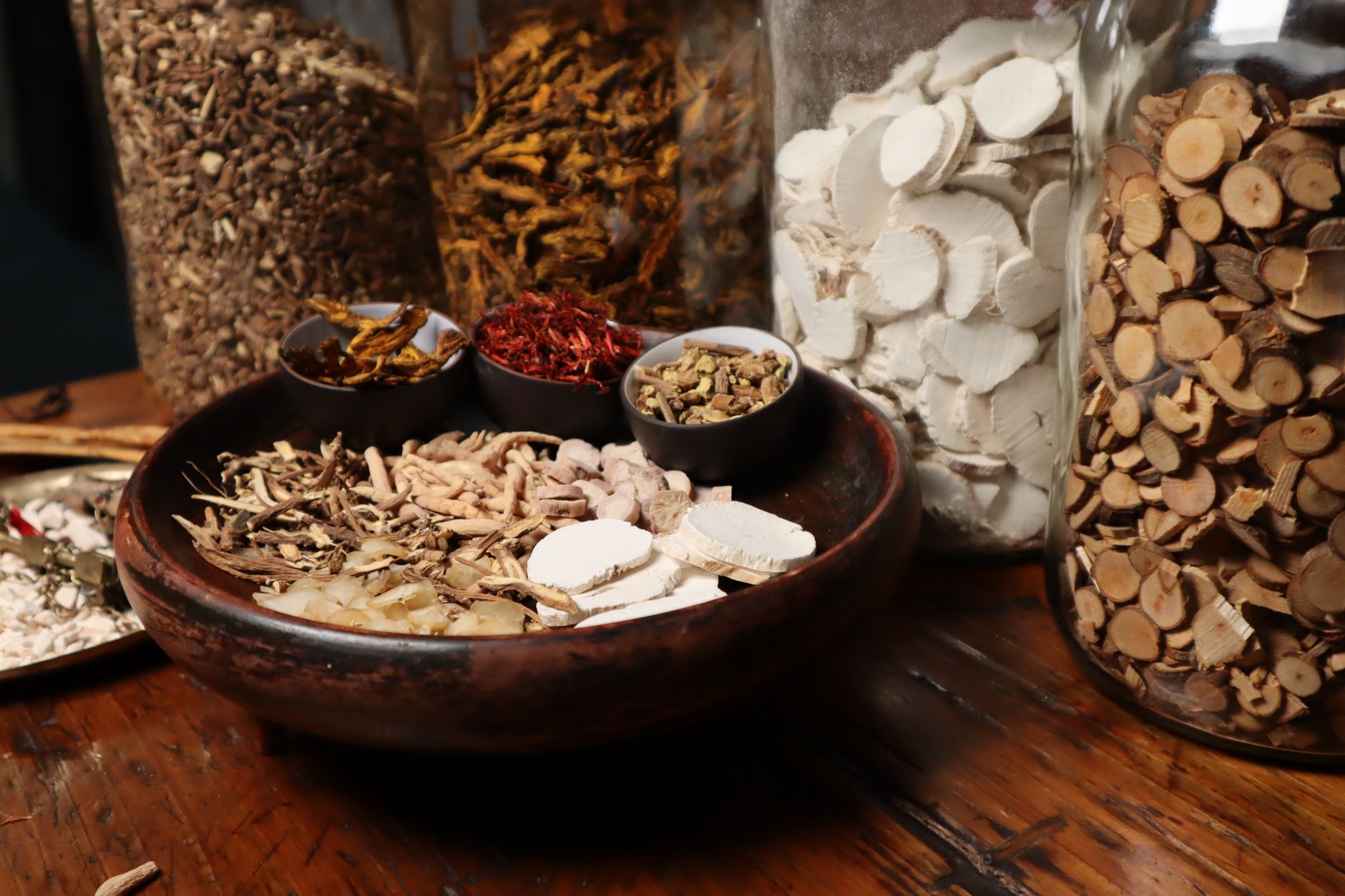
Chinese herbal medicine is arguably the most sophisticated part of the TCM system. It involves hundreds of substances — roots, leaves, seeds, minerals, and even some animal products — that are combined into formulas tailored to the individual.
In TCM theory, herbs are classified by their energetic properties: warming, cooling, drying, moistening, and so on. They are also categorized by which organ systems they are believed to influence. A single formula might contain ten or more ingredients, each playing a specific role — the “emperor” herb addresses the main issue, while “minister” herbs support it or address secondary symptoms.
This is very different from how Western herbalism typically works, where a single herb is often used for a specific condition. In TCM, the formula is designed to match the patient’s unique pattern of imbalance, not just their diagnosis.
Some Chinese herbs have been studied in modern contexts. For example, the herb Huang Qin (Scutellaria baicalensis) has shown anti-inflammatory properties in laboratory studies. But the complexity of traditional formulas makes them difficult to study using standard clinical trial methods.
Moxibustion: Heat as Medicine
Moxibustion involves burning dried mugwort (called moxa) near the skin or on top of acupuncture needles. The herb is compressed into sticks that smolder like incense, or rolled into small cones that are placed directly on the skin.
In TCM theory, moxibustion is used to warm the body and strengthen what is called “yang qi” — the active, warming aspect of vital energy. It is often recommended for conditions involving cold or deficiency, such as poor circulation, digestive weakness, or fatigue.
The practice is less well-known in the West than acupuncture, but it has a long history. Classical texts describe moxibustion as being particularly useful for conditions where the patient is too weak to tolerate needles.
Modern research has explored moxibustion for conditions like breech presentation in pregnancy, where some studies have found it may help turn the baby. The evidence is not conclusive, but the practice continues to be used in many TCM clinics.
Tai Chi and Qigong: Movement as Practice
Not all TCM practices involve needles, cups, or herbs. Tai chi (太极拳) and qigong (气功) are movement-based practices that combine slow, deliberate movements with breath control and mental focus.
In TCM theory, these practices are believed to cultivate and regulate qi. The slow movements are designed to encourage smooth flow through the meridians, while the breath work helps calm the mind and support the internal organs.
Tai chi has been studied extensively in modern contexts, particularly for balance and fall prevention in older adults. The evidence is fairly strong — multiple systematic reviews have found that regular tai chi practice can improve balance and reduce the risk of falls. This is one area where the TCM framework and modern research align reasonably well, even if they explain the benefits differently.
How These Practices Fit Together
One of the most common misconceptions about TCM is that these practices are interchangeable — that you can pick acupuncture or cupping or herbs depending on what sounds appealing. In practice, TCM practitioners typically use a combination of methods based on the patient’s specific pattern.
A patient presenting with chronic headaches might receive acupuncture to address the meridian involved, herbal medicine to address the underlying pattern, and dietary recommendations to support the digestive system. The practices are not competing options — they are complementary tools within a single framework.
This integrated approach is one of the things that makes TCM feel so different from Western medicine. Instead of isolating a symptom and treating it directly, the practitioner looks for the pattern that connects all the symptoms together.
Why People Turn to TCM Practices
People seek out TCM practices for many reasons. Some grow up with them and continue out of habit or cultural comfort. Others turn to TCM after finding limited relief from conventional medicine for chronic conditions like back pain, digestive issues, or fatigue.
There is also a growing interest in TCM practices among wellness enthusiasts who are curious about holistic approaches. Acupuncture studios have become common in many Western cities, and gua sha tools are now sold in mainstream beauty stores.
What’s worth noting is that many people who use TCM practices do not see them as a replacement for modern medicine. They use both — sometimes simultaneously, sometimes sequentially. In China, it is common for hospitals to offer both TCM and Western medical treatments under the same roof.
The Modern Perspective on TCM Practices
Scientific research on TCM practices is a mixed picture. Some practices, like tai chi, have reasonably strong evidence for specific benefits. Others, like acupuncture, have evidence that is suggestive but not conclusive. Many herbal formulas have not been rigorously studied in the way modern pharmaceuticals are.
What researchers often point out is that the TCM framework and the scientific framework measure different things. A TCM practitioner might say a treatment “regulates qi,” while a scientist might say it “modulates pain signaling pathways.” Both could be describing the same phenomenon through different lenses.
For now, the gap between the two frameworks remains — but that doesn’t stop millions of people from finding value in both. The practices continue to evolve, adapt, and find new audiences around the world.
Frequently Asked Questions
Are TCM practices safe?
When performed by a qualified practitioner, most TCM practices are considered low-risk. Acupuncture uses sterile, single-use needles. Cupping and gua sha may cause bruising but rarely cause serious injury. Herbal medicine carries more risk, as some herbs can interact with medications or cause side effects. Some people find it helpful to inform your doctor if you are using TCM treatments.
Do TCM practices work for everyone?
No treatment works for everyone, and TCM is no exception. Some people find significant relief from acupuncture or herbal medicine, while others notice little effect. The TCM framework itself acknowledges that individual constitution plays a major role in how someone responds to treatment.
Can TCM practices be combined with Western medicine?
Many people use both systems together. In fact, this is common practice in China and increasingly in the West. However, you might consider informing both your doctor and your TCM practitioner about all treatments you are receiving, especially when it comes to herbal medicine, which can interact with pharmaceutical drugs.
Related TCM Concepts
- What Is Qi and How Does It Work?
- The Meridian System: How Energy Moves Through the Body
- Yin and Yang: The Foundation of TCM Theory
- The Five Elements: Wood, Fire, Earth, Metal, Water
- Pattern Diagnosis: How TCM Identifies Imbalance