
If you’ve spent any time on social media or in a wellness store recently, you’ve probably seen a small, smooth stone tool being glided across someone’s face or neck. It looks like a gentle massage, but the marks it leaves behind can be dramatic—sometimes a series of red or purple streaks. This is gua sha, a practice that has been around for centuries but has recently found a new audience in the West. But what exactly is it, and where does it come from?
What Is Gua Sha?
Gua sha is a traditional Chinese healing technique. The name itself gives you a clue about what it involves. “Gua” (刮) means to scrape or rub. “Sha” (痧) refers to the reddish, raised marks that appear on the skin after the treatment. So, gua sha literally means “scraping away the sha.”
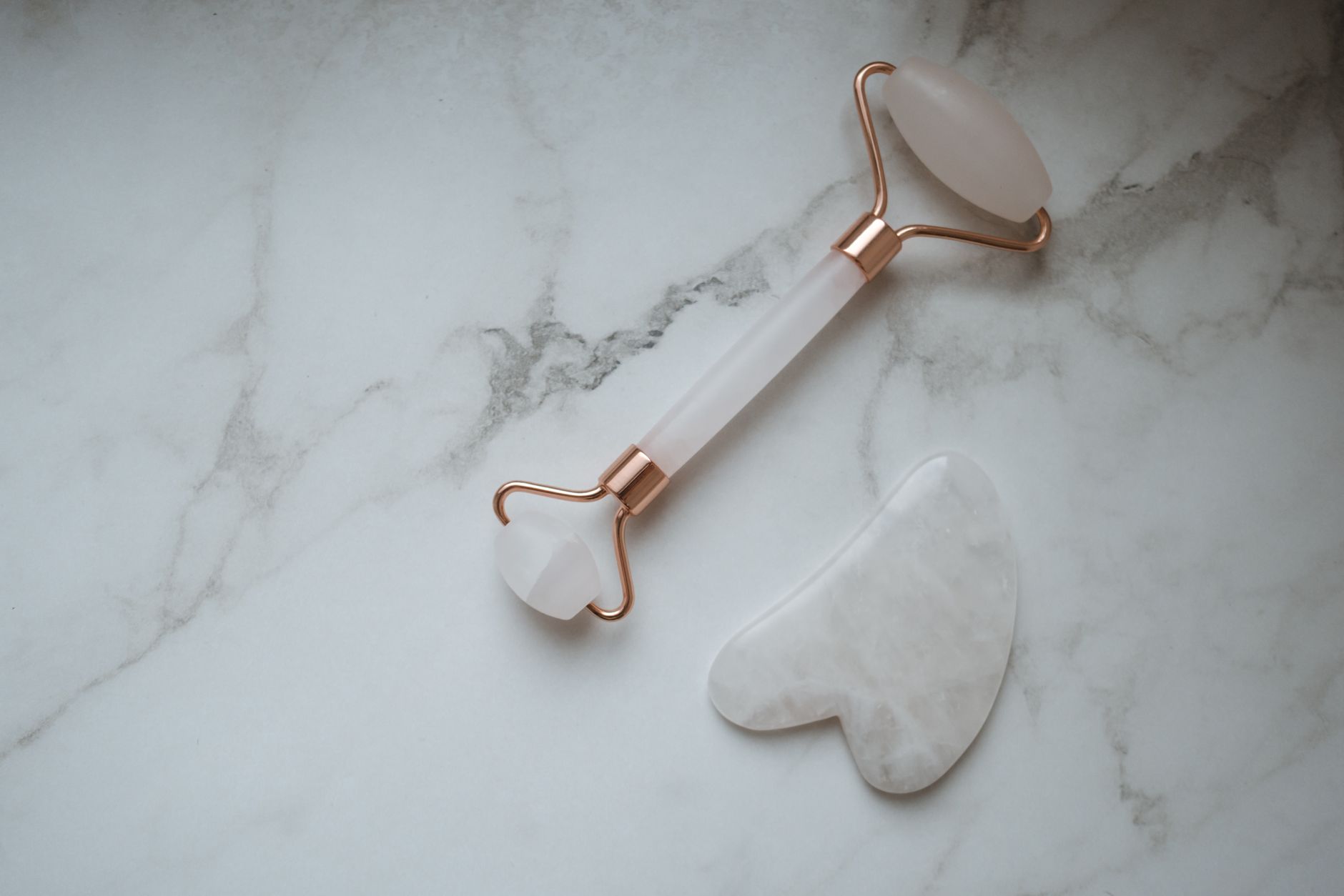
In a typical session, a practitioner uses a smooth-edged tool—often made from jade, rose quartz, buffalo horn, or even a ceramic spoon—to repeatedly stroke the skin in a specific direction. The pressure is firm but not painful. The goal is to create light bruising or petechiae, which are tiny red or purple spots caused by broken capillaries under the skin.
These marks are not considered a side effect. In TCM, they are seen as a visible sign that the treatment is working. The sha marks are believed to indicate that stagnant blood or toxins are being brought to the surface, where the body can reabsorb and eliminate them.
The TCM Perspective on Gua Sha
To understand why gua sha is done, you need to understand how TCM views the body. In TCM theory, health depends on the smooth flow of qi (vital energy) and blood through a network of pathways called meridians. When this flow is blocked or stagnant, it can lead to pain, tension, or illness.
Gua sha is one of several techniques used to address this stagnation. Within the TCM framework, the scraping motion is thought to break up blockages and encourage fresh blood and qi to move to the area. This is why the marks appear—they are the physical evidence of that stagnation being released.
Practitioners often use gua sha for conditions involving muscle pain, tension, or stiffness. It is commonly applied to the back, neck, shoulders, and limbs. In recent years, it has also become popular as a facial treatment, where lighter pressure is used to promote circulation and reduce puffiness.
How Is Gua Sha Performed?
A typical gua sha session begins with the practitioner applying a thin layer of oil or lotion to the skin. This helps the tool glide smoothly and prevents irritation. The practitioner then uses the tool to make long, even strokes in one direction—usually following the flow of the meridians or the direction of the muscles.
The pressure is adjusted based on the area being treated and the client’s comfort. On the back or shoulders, the pressure can be quite firm. On the face, it is much lighter. The strokes are repeated until the sha marks appear, which can take anywhere from a few seconds to a couple of minutes.
After the session, the marks typically last for a few days to a week. They may feel tender or warm to the touch, but this usually fades quickly. Some practitioners recommend drinking warm water after a session and avoiding cold or raw foods for a few hours, as the body is considered to be in a more vulnerable state.
Historical Origins of Gua Sha
Gua sha is not a modern invention. Its roots go back centuries in Chinese medicine. The earliest known reference to a similar technique appears in the Shang Han Lun (Treatise on Cold Damage Disorders), a classical medical text written by Zhang Zhongjing around 200 CE. In that text, the author describes using a scraping tool to treat certain febrile diseases.
Over the centuries, the practice evolved and spread. It became a common folk remedy in rural China, where people would use household items like spoons or coins to treat heatstroke, headaches, and muscle pain. The technique was passed down through families and communities, often without formal medical training.
In the 20th century, gua sha was formalized as part of modern TCM practice. It is now taught in TCM schools and used by licensed practitioners around the world. Despite its long history, it remains a somewhat controversial practice in Western medicine, where the visible bruising can be alarming to those unfamiliar with it.
Facial Gua Sha: The Modern Trend
One of the most visible forms of gua sha today is facial gua sha. This version uses a smaller, gentler tool and much lighter pressure. It is often done at home as part of a skincare routine, rather than in a clinical setting.
In TCM theory, facial gua sha is believed to stimulate circulation, reduce puffiness, and promote a healthy glow. The strokes are typically performed in an upward and outward direction, following the natural contours of the face. Many people find it relaxing and use it as a way to relieve tension in the jaw and forehead.
It is worth noting that facial gua sha does not typically produce the same dramatic sha marks as body gua sha. The pressure is too light for that. Instead, the goal is more about lymphatic drainage and muscle relaxation than about releasing deep stagnation.
Modern Perspective on Gua Sha
What does modern research say about gua sha? The evidence is still limited, but a few studies have explored its effects. Some research has suggested that gua sha may help reduce pain and improve range of motion in people with chronic neck pain or lower back pain. Other studies have looked at its potential to reduce inflammation and improve circulation.
However, most of these studies are small, and the quality of the evidence is mixed. Researchers have noted that it is difficult to design a proper placebo-controlled study for gua sha, since the visible marks make it obvious who received the treatment. This makes it hard to separate the physical effects from the placebo effect.
From a scientific perspective, the marks themselves are simply bruises—broken capillaries under the skin. The body will reabsorb the blood over time, which is a normal healing process. Whether this process has any specific therapeutic benefit beyond what a regular massage might provide is still an open question.
What is clear is that many people find gua sha helpful for relieving muscle tension and promoting relaxation. Whether the mechanism is physiological, psychological, or a combination of both, the practice continues to attract a loyal following.
Frequently Asked Questions
Does gua sha hurt?
Most people describe the sensation as a firm, deep pressure rather than sharp pain. The area may feel tender during and after the session, especially where the sha marks appear. If the pressure is too intense, the practitioner can adjust it.
How long do the marks last?
The sha marks typically last between three and seven days, depending on the individual and the intensity of the treatment. They fade gradually, similar to a bruise. The marks are not permanent and do not indicate injury.
Can I do gua sha at home?
Yes, many people practice facial gua sha at home using a small stone tool. For body gua sha, some people find it helpful to learn from a trained practitioner first, as improper technique can cause discomfort or injury. Using too much pressure or scraping over bony areas can be painful.
Is gua sha safe for everyone?
Gua sha is generally considered safe for healthy adults. However, you might consider avoiding it on areas with sunburn, open wounds, varicose veins, or skin conditions like eczema. People with blood clotting disorders or those taking blood-thinning medication may want to consult a doctor before trying it. Pregnant women might also choose to avoid gua sha on the abdomen and lower back.
Related TCM Concepts
- What Is Qi and How Does It Work?
- What Is Cupping Therapy?
- Understanding Meridians in TCM
- Blood Stagnation in TCM
- What Is Tui Na Massage?