
If you’ve ever walked through a market in southern China, you’ve probably seen them: rows of dark, mysterious bottles or steaming kettles filled with something that looks more like medicine than tea. This is 凉茶 (liáng chá), often translated as “herbal tea” or “cooling tea.” It’s not your typical cup of jasmine or oolong. It’s bitter, earthy, and sometimes downright unpleasant to the unaccustomed palate. Yet when someone in a Chinese household feels a scratchy throat, a headache, or just a bit “off,” reaching for a bottle of 凉茶 is often the first instinct.
Why? The answer lies in a way of thinking about the body that is very different from modern Western medicine. It’s a system built on observation, balance, and the idea that health is about managing invisible forces like heat, dampness, and wind. And 凉茶 is one of its most practical, everyday tools.
What Exactly Is 凉茶?
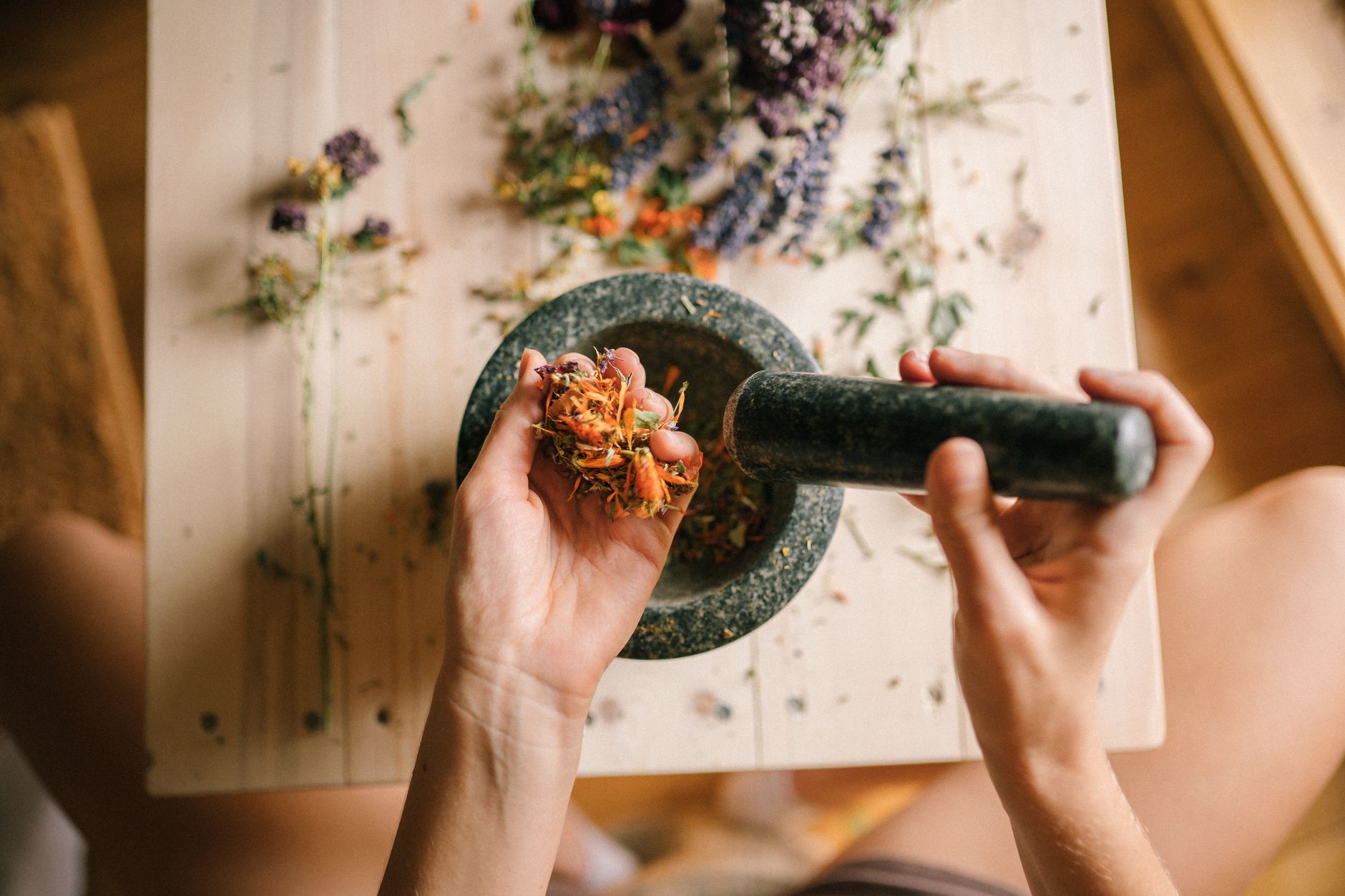
Despite the name, 凉茶 is not really “tea” in the sense of Camellia sinensis leaves. It’s a broad category of herbal decoctions made from a variety of plants, roots, and flowers. The “凉” (liáng) means “cool” or “cold,” and the “茶” (chá) means “tea.” So literally, it’s “cooling tea.”
The ingredients vary wildly depending on the region, the season, and the specific ailment. Common components include:
- Honeysuckle (金银花, jīn yín huā) — a flower often used for its perceived cooling properties
- Chrysanthemum (菊花, jú huā) — commonly used for eye strain and heat-related headaches
- Licorice root (甘草, gān cǎo) — added to balance bitterness and harmonize other herbs
- Prunella vulgaris (夏枯草, xià kū cǎo) — a plant believed to clear heat from the liver
- Lophatherum (淡竹叶, dàn zhú yè) — bamboo leaves used for urinary heat
Some recipes are simple, with just two or three ingredients. Others are complex formulas passed down through families for generations. The key point is that 凉茶 is not a single drink — it’s a category of remedies, each designed for a slightly different pattern of imbalance.
The TCM Framework: Why “Cooling” Matters
To understand why someone would drink a bitter, cold tea when they feel unwell, you have to understand how Traditional Chinese Medicine (TCM) categorizes illness. In the TCM framework, health is a state of balance between opposing forces: yin and yang, hot and cold, interior and exterior.
When a person feels unwell, TCM practitioners often describe the problem in terms of “pathogenic factors” that have entered the body. One of the most common is “heat” (热, rè). This isn’t necessarily a fever in the Western sense — it’s a pattern of symptoms that includes things like:
- A red, sore throat
- Red eyes
- Irritability or restlessness
- Dark, concentrated urine
- A feeling of being hot or flushed
- Thirst for cold drinks
In this framework, the body has gotten too “hot,” and the solution is to introduce something “cooling” to restore balance. That’s where 凉茶 comes in. The herbs used in these teas are classified as “cold” or “cool” in nature. By drinking them, the idea is that you are literally introducing a cooling energy into the system to counteract the excess heat.
This is not about temperature in the literal sense — you can drink 凉茶 warm or at room temperature. The “cooling” refers to the energetic quality of the herbs themselves, as described in classical Chinese medical texts.
Not Just Heat: Other Patterns 凉茶 Addresses
While “heat” is the most common reason, 凉茶 is also used for other patterns. In TCM theory, summer heat and dampness often combine, especially in humid climates like southern China. This can create a pattern called “damp-heat” (湿热, shī rè), which might show up as:
- Heavy, sluggish feeling in the body
- Greasy skin or scalp
- Digestive discomfort
- A bitter taste in the mouth
Many 凉茶 formulas include herbs that are believed to “dry dampness” as well as clear heat. This is why you’ll see 凉茶 consumed so frequently in places like Guangdong, Hong Kong, and Singapore — the hot, humid climate is considered a perfect breeding ground for damp-heat patterns.
There’s also the concept of “wind-heat” (风热, fēng rè), which in TCM is associated with the early stages of a cold or flu. Symptoms might include a sore throat, mild fever, headache, and a runny nose with yellow discharge. In this case, 凉茶 is used to “release the exterior” and “clear heat” at the same time.
A Cultural Habit, Not a Prescription
What’s interesting about 凉茶 is how deeply it is woven into everyday life in southern China. It’s not something you only get from a TCM practitioner. You can buy it in cans at convenience stores, order it at tea shops, or brew it at home from pre-packaged herb sachets. There are even dedicated 凉茶 shops (凉茶铺, liáng chá pù) that have been operating for generations, where the owner might ask you a few questions about your symptoms before handing you a cup.
Growing up in Singapore, I never thought twice about seeing these shops on every corner. It was just what you did when you felt a cold coming on — you stopped by the 凉茶 shop, drank something bitter, and hoped it worked. Only later did I realize how unusual this looks to someone from a Western medical background, where you might typically reach for a painkiller or an antihistamine instead.
The habit is so ingrained that many Chinese families have their own “go-to” 凉茶 recipes for specific situations. A grandmother might brew a particular blend when a grandchild has a fever. A mother might make another when her husband complains of a headache after a long day in the sun. These are not prescriptions from a doctor — they are cultural knowledge passed down through observation and experience.
Historical Roots: From the South to the World
The practice of drinking herbal decoctions for health goes back thousands of years in China. But 凉茶 as a distinct category is particularly associated with the Lingnan region (modern-day Guangdong and Guangxi). The hot, humid climate of this area made heat-related illnesses a constant concern, and local herbalists developed formulas using plants that grew abundantly in the region.
One of the most famous 凉茶 brands, Wang Laoji (王老吉), traces its origins back to 1828 in Guangzhou. According to company lore, the founder, Wang Zebang, created a formula to help people cope with the region’s oppressive summer heat. Today, Wang Laoji is sold in cans across China and internationally — a testament to how a local folk remedy became a mass-market product.
Another well-known brand, JDB (加多宝), has a similar origin story. Both companies have turned 凉茶 into a multi-billion dollar industry, complete with slick advertising campaigns and celebrity endorsements. But at its core, the product is still the same bitter, herbal decoction that people have been drinking for generations.
Modern Perspective: What Does Science Say?
Curious about the science? The research on 凉茶 is limited, but some studies have explored the properties of individual ingredients. Honeysuckle, for example, has been studied for its antimicrobial and anti-inflammatory effects. Chrysanthemum contains compounds that have shown antioxidant activity in laboratory settings. Licorice root has been investigated for its soothing effects on the throat.
However, it’s important to note that most of these studies are preliminary, and they don’t necessarily validate the TCM framework of “cooling” or “heat-clearing.” What one system sees as a pharmacological effect, the other sees as an energetic property. The two frameworks simply measure different things.
From a public health perspective, 凉茶 is generally considered safe for most people when consumed in moderation. Some formulas can be quite strong, and certain herbs may interact with medications. Pregnant women and people with chronic health conditions are usually advised to consult a healthcare professional before using herbal remedies.
What’s clear is that millions of people find 凉茶 helpful, whether through a placebo effect, genuine physiological action, or simply the comfort of a familiar ritual. The practice persists not because of scientific validation, but because it fits naturally into a cultural framework that makes sense to the people who use it.
When Do People Actually Drink It?
凉茶 is not something you drink daily like green tea. It’s typically consumed when someone feels the early signs of illness, or as a preventive measure during certain seasons. Common scenarios include:
- After eating too much “heaty” food — In TCM, foods like fried chicken, spicy dishes, and durian are considered “heaty.” A cup of 凉茶 is believed to balance things out.
- During hot weather — Many people drink 凉茶 in summer to prevent heat-related discomfort.
- At the first sign of a sore throat — This is probably the most common use. The idea is to “clear the heat” before it develops into a full-blown cold.
- After a night of drinking — Some people use 凉茶 as a hangover remedy, believing it helps clear the “heat” and toxins from alcohol.
It’s worth noting that 凉茶 is almost always consumed unsweetened or with minimal sugar. The bitterness is considered part of the medicine — if it tastes good, some might say, it’s probably not strong enough to work.
Frequently Asked Questions
Is 凉茶 safe to drink every day?
Most 凉茶 formulas are designed for short-term use when symptoms appear. Drinking them daily over long periods is not generally recommended, as some herbs can be quite strong. In TCM theory, overusing cooling herbs might potentially weaken the digestive system.
Can children drink 凉茶?
Many Chinese families give mild 凉茶 formulas to children, especially for common issues like sore throats or mild fevers. However, the dosage and ingredients are usually adjusted to be gentler. It’s always a good idea to check with a healthcare professional for young children.
Does 凉茶 taste as bad as people say?
It depends on the formula. Some 凉茶 are quite bitter, especially those made with strong herbs like andrographis (穿心莲). Others, like chrysanthemum tea, are mild and slightly sweet. The more medicinal versions are definitely an acquired taste.
Related TCM Concepts
- Food Energetics: Cooling vs Warming Foods
- What Is Qi and How Does It Work?
- The Concept of Heat and Cold in TCM
- Common Chinese Herbs and Their Uses
- Seasonal Health in TCM: Summer