
If you’ve ever visited a Chinese home, you might have noticed something right away: shoes come off at the door, and socks stay on. Even in warm weather, guests are rarely seen walking around barefoot. It’s a small habit, but one that feels almost automatic for many people who grew up in Chinese households.
I remember being surprised the first time a friend visiting from abroad kicked off her shoes and walked barefoot across my living room floor. It wasn’t wrong — it just felt unfamiliar. In the environment I grew up in, bare feet on tile floors was something you avoided, not something you did casually.
So why do so many Chinese people keep their socks on indoors? The answer touches on ideas about health, comfort, and a way of understanding the body that goes back centuries.
The Floor Temperature Factor
One practical reason is the type of flooring common in many Chinese homes. Tile, marble, and stone floors are widespread, especially in warmer regions like southern China and Southeast Asia. These materials stay cool to the touch, even when the air temperature is warm.
Walking barefoot on tile can feel pleasant on a hot day. But in the TCM framework, that coolness isn’t just a sensation — it’s something the body has to respond to. The soles of the feet are considered an area where the body can easily lose heat or absorb cold from the environment.
In many Chinese households, slippers are kept by the door for guests. If someone forgets to bring a pair, the host will often offer them. Walking around in socks is the default. Bare feet are the exception.
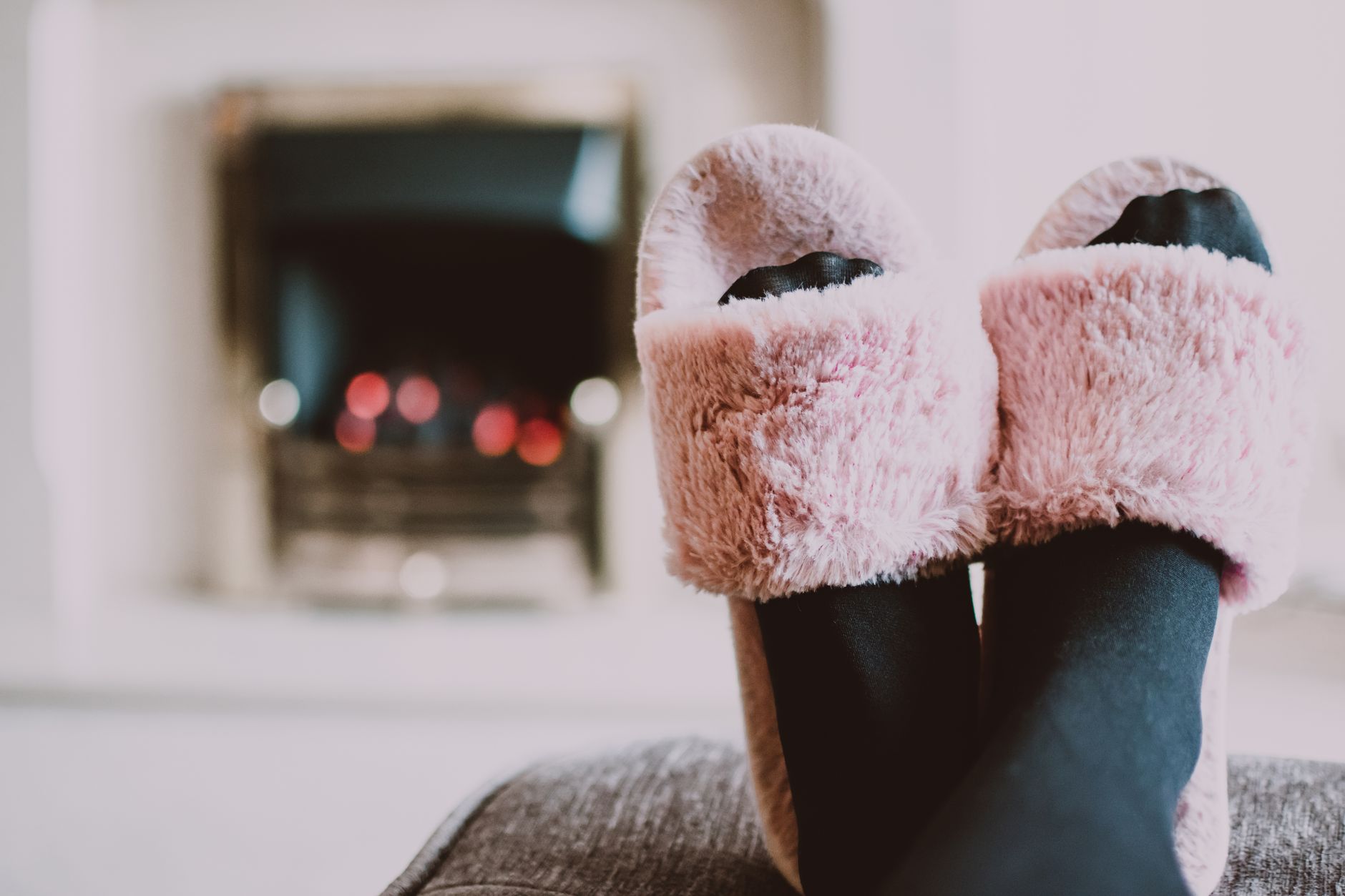
The TCM View: Cold Enters Through the Feet
Within the TCM framework, the feet are seen as particularly vulnerable to what is called “cold invasion.” This is not about catching a cold in the viral sense. Instead, it refers to the idea that cold energy from the environment can enter the body and disrupt its internal balance.
According to classical Chinese medical texts, the feet contain important acupuncture points and are connected to the body’s internal organs through the meridian system. The Kidney meridian, for example, begins at the sole of the foot. In TCM theory, the Kidneys are associated with the body’s foundational energy, or “qi.”
When cold enters through the feet, it is believed to affect the flow of qi and blood. Over time, some people find this can create patterns that TCM practitioners describe as “cold in the body” — a state that might show up as poor circulation, digestive sluggishness, or a general feeling of being chilled.
This is why many Chinese parents remind their children to wear socks, even indoors. It’s not just about comfort. It’s about preventing something before it starts.
The Spleen and the Idea of “Dampness”
Another concept that comes up in this context is “dampness.” In TCM, dampness is a term used to describe a pattern involving sluggishness, heaviness, and poor digestion. It is often linked to the Spleen, which in TCM theory is responsible for transforming food into energy and transporting fluids throughout the body.
Cold and dampness are thought to work together. When the feet are exposed to cold floors, the body may struggle to maintain warmth in the lower body. This, in turn, is believed to affect the Spleen’s function. The result, according to this framework, can be a buildup of internal dampness — a condition that TCM associates with fatigue, brain fog, and loose stools.
Wearing socks indoors is seen as a simple way to protect the Spleen from this kind of disruption. It’s a preventive measure, not a treatment for something that has already gone wrong.
Cultural Habits That Reinforce the Practice
Beyond TCM theory, there are cultural habits that make sock-wearing feel natural. In many Chinese households, shoes are removed at the entrance. This keeps the home clean and separates the outside from the inside. Once shoes are off, socks become the default footwear.
In colder months, people may wear thick wool socks or house slippers. In warmer months, thin cotton socks are common. The key is that the feet are covered, even if only lightly.
This habit is so ingrained that it can feel strange to see someone walking barefoot indoors. It’s not that bare feet are considered dirty or inappropriate — they’re just seen as unprotected. The assumption is that if your feet are bare, you might get cold, and that cold might lead to something else.
What About Summer?
One question that often comes up is whether this practice applies in hot weather. After all, if it’s 35°C outside, why would anyone worry about cold feet?
In the TCM framework, the answer has to do with how the body regulates temperature. When it’s hot, the body opens its pores to release heat. This is considered a vulnerable state. The body’s defenses are more open, and external cold — even from a tile floor — can enter more easily.
Air conditioning also plays a role. Many indoor spaces in China are kept quite cool during summer. Walking barefoot on a cold floor in an air-conditioned room is seen as a double risk: cold from below and cold from the air.
So even in summer, many Chinese people keep their socks on indoors. The logic is consistent: protect the feet, protect the body’s balance.
Modern Perspective
What does modern research say about this practice? The scientific evidence on wearing socks indoors is limited, but some studies have explored related topics.
Research on foot temperature and sleep quality has found that warming the feet before bed can help people fall asleep faster. This is because a warm foot temperature helps dilate blood vessels and signals the body that it’s time to rest. In this sense, keeping feet warm aligns with what sleep researchers recommend.
There is also research on the connection between cold feet and the immune system. Some studies suggest that cooling the feet can cause blood vessels to constrict, which may reduce blood flow to the nasal passages and potentially affect immune response. This is a very different mechanism from the TCM explanation, but it points in a similar direction: cold feet are not neutral for the body.
That said, the TCM framework and modern physiology operate on completely different principles. One describes energy and balance. The other describes blood flow and immune cells. They are not competing explanations — they are different ways of looking at the same phenomenon.
Not Everyone Follows This Practice
It’s important to note that not all Chinese people wear socks indoors. Younger generations, especially those who have grown up in more Western-influenced environments, may walk around barefoot at home. People living in warmer climates may also be less strict about it.
Like many TCM-influenced habits, this one is more common among older generations and in households where traditional ideas about health are still passed down. It is a cultural tendency, not a universal rule.
What makes the practice interesting is how consistent it is across different regions and social groups. Whether in Beijing, Guangzhou, or Singapore, the same basic habit appears: shoes off, socks on.
Frequently Asked Questions
Is it unhealthy to walk barefoot indoors according to TCM?
Within the TCM framework, walking barefoot on cold floors is believed to allow cold energy to enter the body through the feet. Some people find this may potentially disrupt digestion and circulation over time. The practice of wearing socks is seen as a simple preventive measure.
Do Chinese people wear socks to bed?
Some do, but it is less common than wearing socks during the day. In TCM, sleeping with socks on is sometimes recommended for people who have trouble keeping their feet warm at night. However, many prefer to let the feet breathe during sleep.
What kind of socks do Chinese people wear indoors?
It varies by season and personal preference. In winter, thick wool or fleece socks are common. In summer, thin cotton socks are often worn. Many households also provide slippers for guests, so socks alone are not always required.
Is this practice unique to Chinese culture?
No. Many East Asian cultures, including Japanese and Korean, also have traditions of removing shoes indoors and wearing socks or slippers. The TCM reasoning is specific to Chinese medicine, but the habit itself is shared across the region.
Related TCM Concepts
- What Is Qi and How Does It Work?
- The Spleen and Stomach in TCM
- Understanding Dampness in TCM
- Why Does TCM Say No to Cold Drinks?
- Food Energetics: Cooling vs Warming Foods